
- Kingdom: Animalia
- Phylum: Mollusca
- Class: Gastropoda
- Subclass: Heterobranchia
- Order: Nudibranchia
- Suborder: Dexiarchia
- Infraorder: Aeolidida
- Superfamily: Flabellinoidea
- Family: Coryphellidae
- Scientific name: Coryphella verrucosa
- Norwegian: brun frynsesnegl
Characteristics:
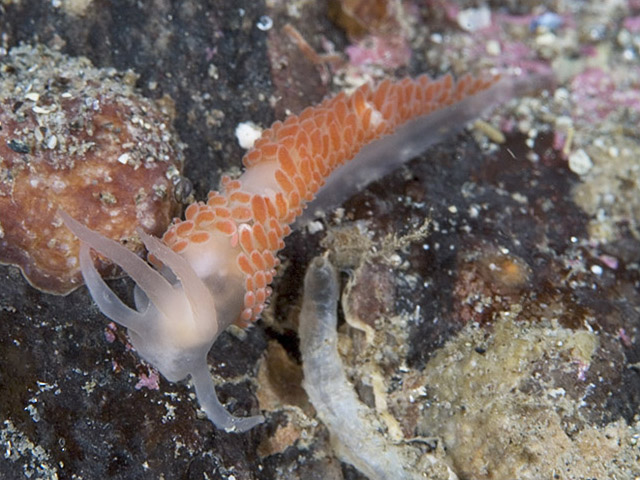
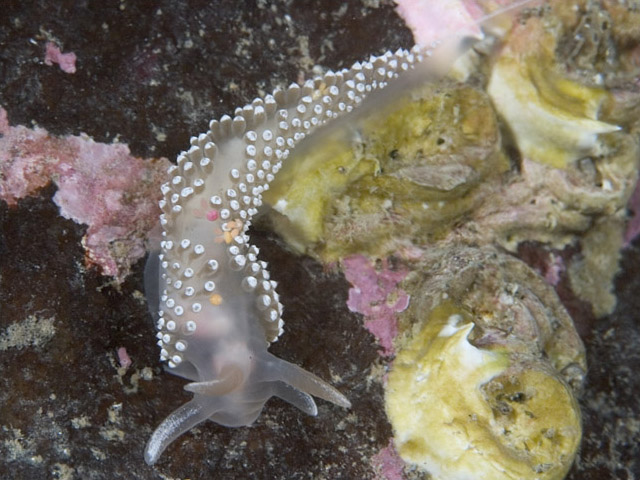
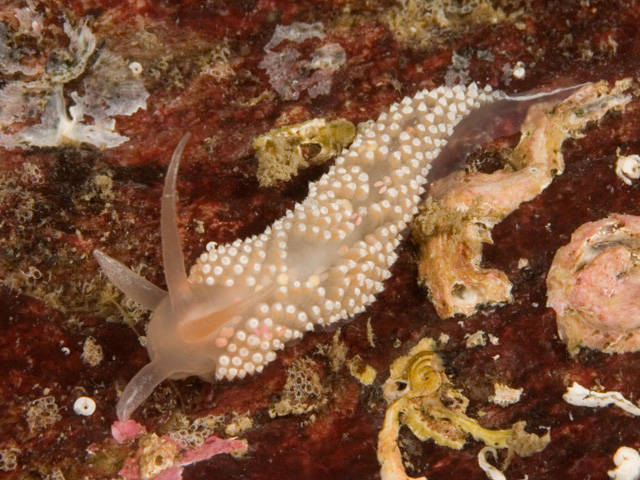
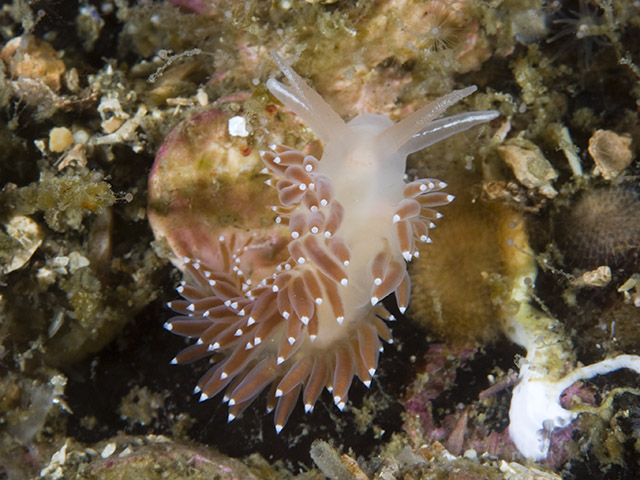
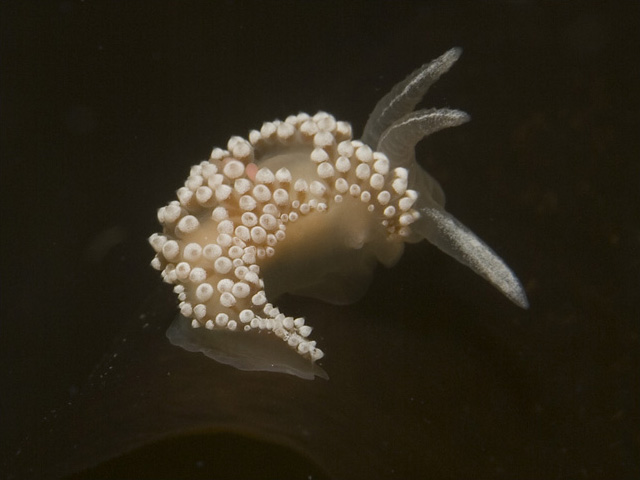
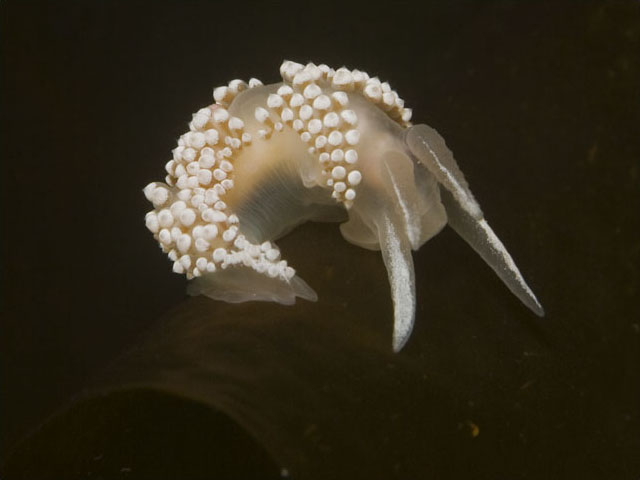
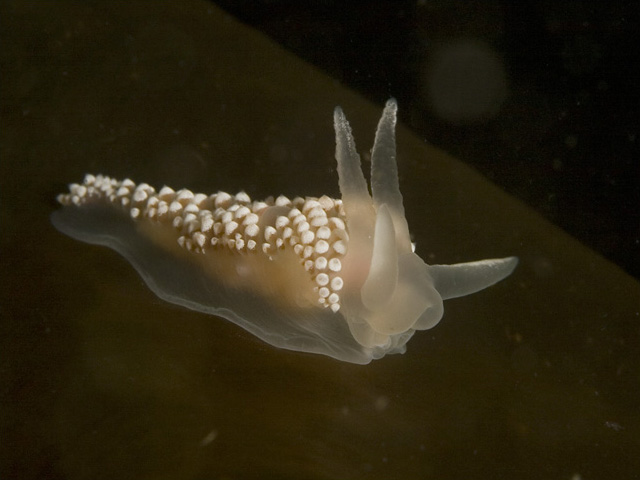
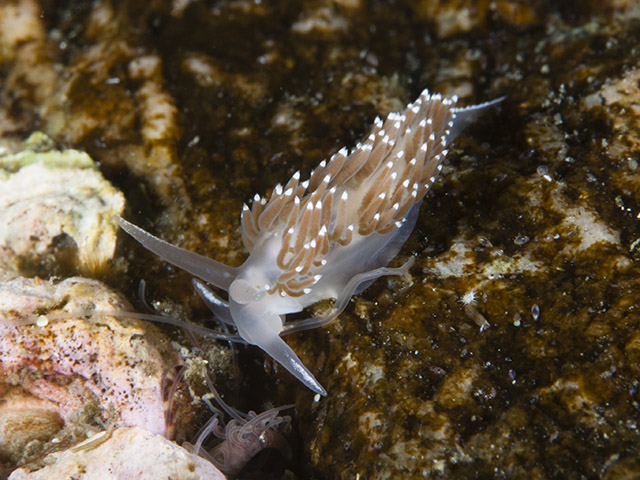
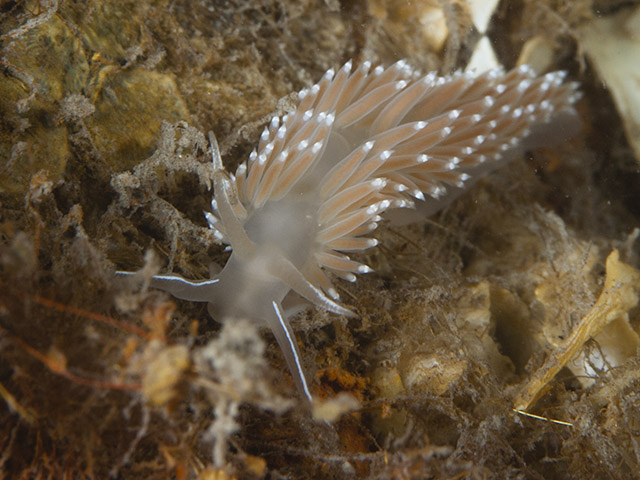
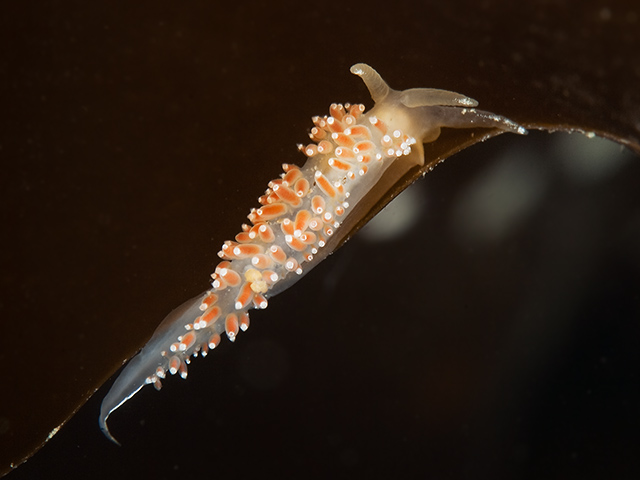
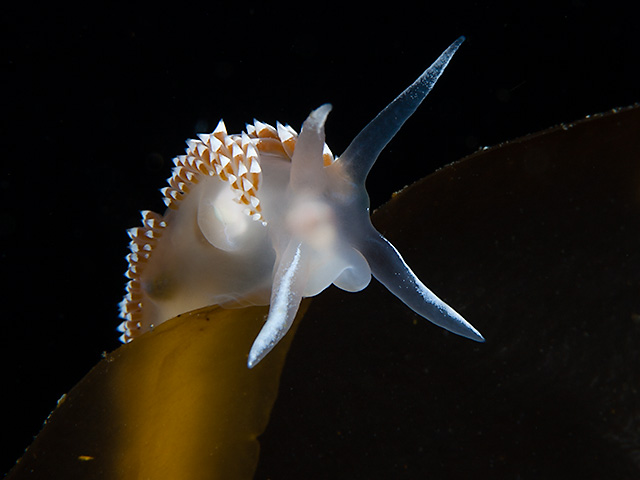
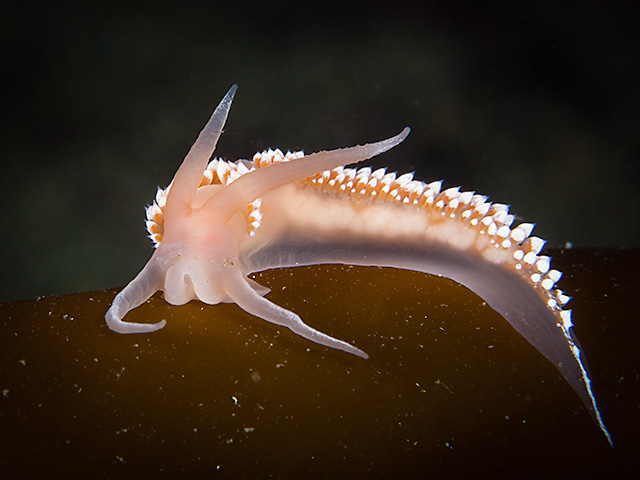
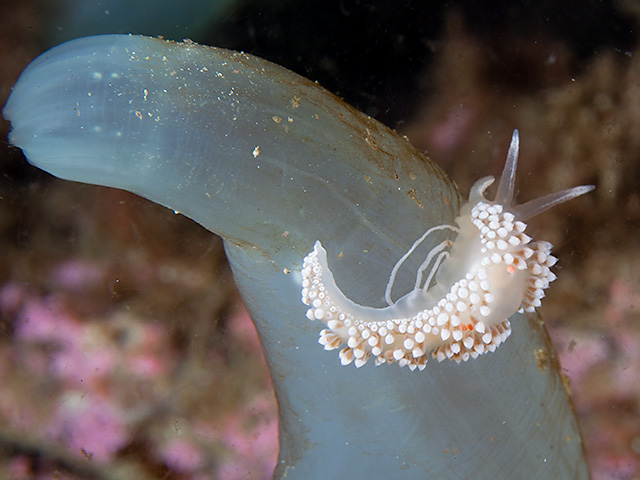
The translucent white body may reach 6 cm in extreme cases, but 2-3 cm is common. Often, there is a white line running along the back, but it tends to be covered by the cerata. The cerata are arranged in rows and come in a wide range of colors, but orange, red and brown are perhaps most frequent. There may be a pink tint on the tentacles. The rhinophores (head tentacles) are wrinkled and usually have a white pigmented line.
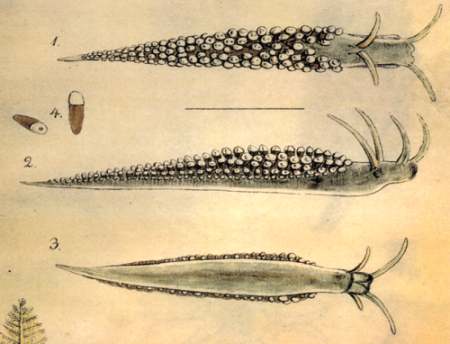
Illustration of Eolidia verrucosa by M. Sars (1829)
The original identification of the species was done by Sars in 1829. He drew a specimen with short, ice-cone-shaped, white-tipped cerata. Studies have later proven that C. verrucosa may have long cerata as well. Individuals with long cerata may be confused with the following species:
- F. browni has smooth or slightly wrinkled rhinophores. The cerata are arranged in groups rather then rows. There is a white pigmented ring around the tip of the cerata. There is not a pink tint on the tentacles.
- M. gracilis does not exceed a length of 15 mm. The cerata is is usually arranged in two, but sometimes as many as five rows. The rhinophores are smooth.
- B. nobilis has rounded papillae on the rhinophores. The cerata are not split in groups.
- C. pellucida has red or orange, white tipped cerata. The rhinophores are wrinkled. There are white pigmentation on the tentacles.
It sometimes hosts the colorful parasite L. agilis.
Habitat:
C. verrucosa has been reported on all depths down to 300 meters. Sand or rocky substrate on current exposed locations seems to be preferred. If is usually encountered grazing on hydroids.
Distribution:
It is widespread in the North Atlantic Ocean and also reported from the North Pacific Ocean. The wide range of coloration of this species may have confused some of the reporters.